Biology & Conservation of Sea Turtles
BIO 361 (Spring 2027) and BIO 361L (Summer 2027)
Undergraduate students looking for an amazing, hands-on learning experience, the Biology & Conservation of Sea Turtles course series is for you! Offered through the Department of Biology, this series consists of two co-requisite courses: BIO 361 (spring 2027 and BIO 361L (summer 2027). BIO 361 is a spring seminar and field studies course conducted on campus at UNCG with three required weekend field trips including two trips to volunteer at the Karen Beasley Sea Turtle Rescue and Rehabilitation Center. BIO 361L is an immersive research experience working with research assistants from the Sea Turtle Conservancy, at the Phipps Biological Field Station in Tortuguero, Costa Rica during summer 2027!
- Total 4 credit hours: BIO 361 Spring Session + BIO 361L Summer Session II
- Six days working at the Karen Beasley Sea Turtle Hospital in North Carolina
- Two days volunteering with the Ocean Advocacy Workshop
- Nine days in Costa Rica working at the oldest sea turtle research program of its kind, to study in a remote area surrounded by the tropical rainforest of Tortuguero National Park
Registration in these courses is available by application only. Applications will be accepted in December 2026. Tentative schedule shown below. Please contact Melanie Stadler at mmstadle@uncg.edu for more details. (UNCG reserves the right to cancel or alter the program format or to change costs due to conditions beyond its control.)
To read more about the program and to apply, click here.
2027 Course Schedule
| Interest meeting: anyone interested in applying or learning more about the course should attend | 2 meetings, TBD, October 2026 | Interest meetings are for students who are thinking about applying for the course. Meetings will last about 30 minutes. Both meetings cover the same material, so you only need to attend one. This is also a great opportunity to ask questions! |
| Applications Due: complete application using link to Study Abroad page below | December 1, 2026 | Submit Application online here. Apply for a Travel Grant here! |
| Class meetings: scheduled time in Spring 2027 | Friday TBD + required field trip weekends | Location: Room 218 in Sullivan Science Building, UNCG Campus |
| Required Field Trips:
Volunteer at the Sea Turtle Hospital Ocean Advocacy Workshop UNCG/UNCW | 1. Jan 22 – 24, 2027 2. May 10-13, 2027 3. TBD |
|
| Costa Rica (required) | July 24 – Aug 1, 2027 | Tortuguero, Costa Rica |
Credit Hours: 4: 3 (BIO 361 Spring 2027) + 1 (BIO 361L Summer 2027, Session II)
Enrollment Limit: 10-12 Students
Interested Applicants: Applicants are expected to attend one of the two Interest Meetings to learn about the course and ask questions (see date, time, and place in table above). The regular class meeting time will be on Fridays.
Apply through UNCG Study Abroad: this is a faculty-led program
Prerequisites: Permission of the instructor; BIO 361 is a per-requisite for BIO 361L; courses must be taken in succession
BIO 361 Course Description: This course will engage students in the study of the biology and conservation of sea turtles and ocean ecosystem health. Students will participate in field work and service-learning activities in North Carolina and will learn about marine conservation efforts in the US through the attendance of a professional workshop.
BIO 361L Course Description: This is a faculty-led, study-abroad course that will engage students in the study of sea turtle research and conservation efforts in Tortuguero, Costa Rica, building on knowledge gained from BIO 361. Students will participate in data collection and field-work activities with international researchers in a remote tropical setting as part of one of the longest running sea turtle conservation projects in the world! Nighttime work will include helping record data about nesting sea turtles, measuring turtles, counting eggs, marking nests, and helping tag turtles. Students will also assist in conducting morning nest surveys. Students will also learn about the unique ecology of Costa Rica and why biodiversity in the country is so diverse.
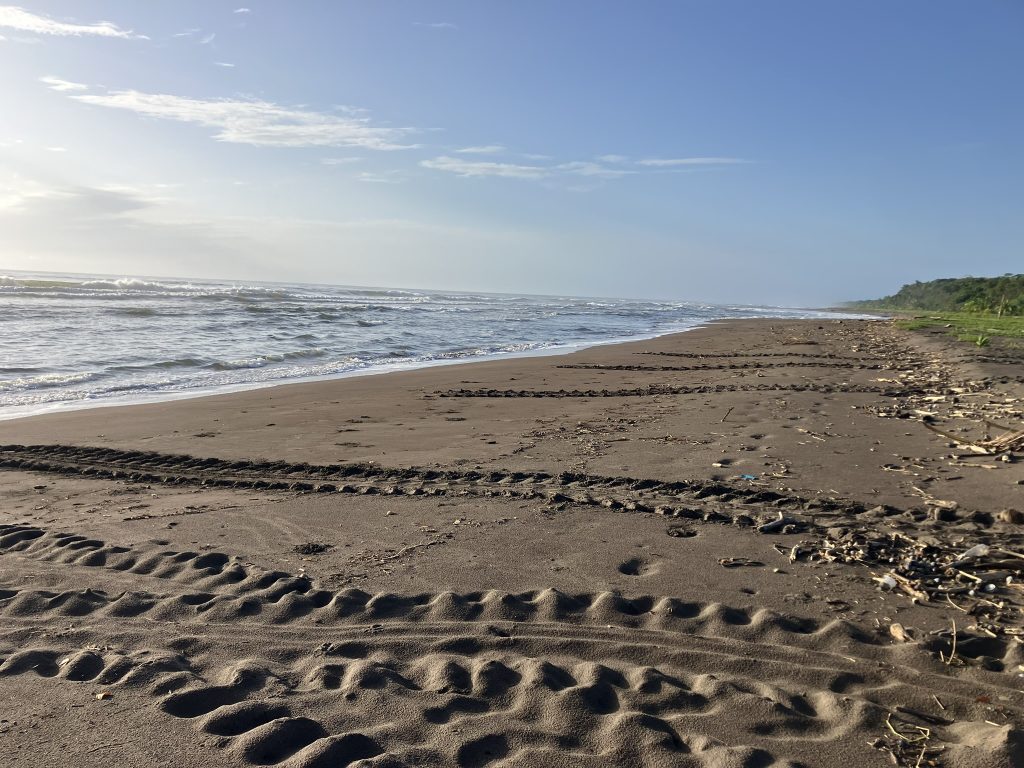
Costa Rica: Students will participate in the oldest on-going sea turtle research program of its kind. Initiated by Dr. Archie Carr in the late 1950s, the tagging project is now coordinated by the Sea Turtle Conservancy (STC). Students will participate in all aspects of data collection on the green turtles that come to nest on the beach at night. Students will need to be physically fit, as tagging the turtles will require five or more miles of walking each night in a tropical climate with lots of humidity and bugs!
Housing will be at the STC’s Tortuguero Biological Field Station. Tortuguero is a remote road-less area on the Caribbean coast, at the edge of a tropical rain forest that is crossed by rivers and streams. Access is only by boat or plane; we will be arriving and departing by boat. The field station is located adjacent to the small village of Tortuguero and the 20,000-hectare Tortuguero National Park. In addition to working with the turtles, students will have the opportunity to meet the people of the local village, a Caribbean coastal community, and work with local school children. On day trips, students may explore the rain forest of the National Park and other ecosystems of the northern Caribbean coast of Costa Rica.
Classroom Studies: Classroom studies constitute a very important part of the course. These classes will involve presentations by faculty, students, and guest speakers. Assignments will consist of presentations, writing assignments, exams, and paper discussions. This time is also used to prepare students for travel and field work.
Cost: Exact cost is TBD, but estimated cost at this time is around $2200.00. Transportation, lodging, meals, and planned trips in Costa Rica are included in the cost. Airfare to/from San Jose, Costa Rica and passport fees are not included.
Not included in cost: Transportation to Surf City and meals. Airfare to/from San Jose, Costa Rica (estimated $800), passport (about $150), airport exit tax in Costa Rica (about $30.00), tips (about $75.00), and personal items. Special field trips may be offered at a small additional cost with in Costa Rica.
Financial Aid: Students are encouraged to consult a UNCG Financial Aid Counselor with questions regarding their eligibility for summer financial aid. In general though, most students are not eligible for financial aid for the summer 2027 BIO 361L course because 1) their financial aid money was all used for fall and spring or 2) students are not enrolled in enough summer hours to qualify. However, Travel Grants are available through Study Abroad, and you do qualify for those!! Apply today!
Contact:
Melanie Stadler
429 Eberhart Building
Email: mmstadle@uncg.edu