

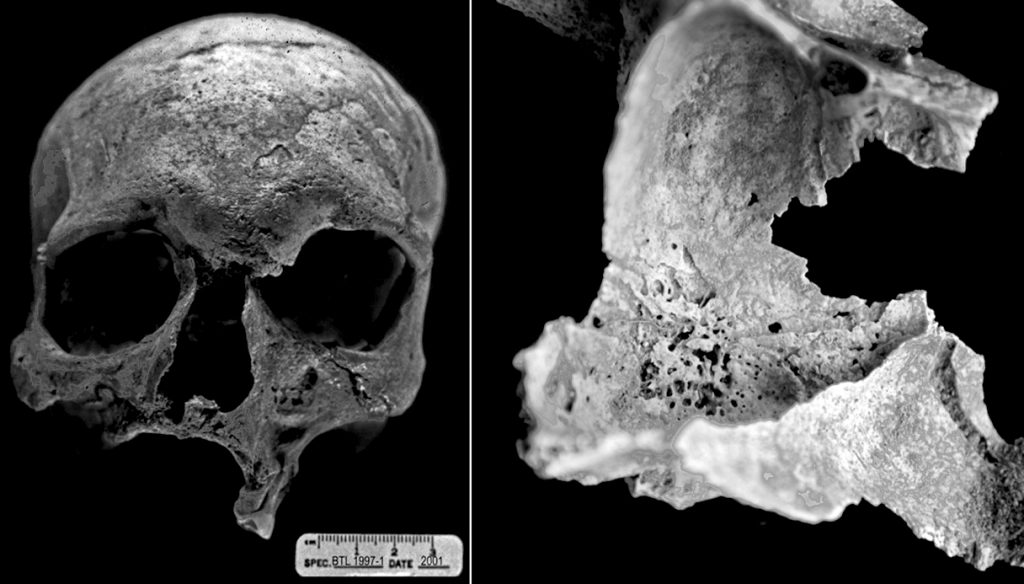
Dr. Gwen Robbins Schug’s work covered in Science Magazine
“Bronze Age leprosy hitched rides along ancient copper and pottery trade route: 4000-year-old scarred jaws in Oman hub mark oldest cases outside South Asia”
From Science Magazine, May 8, 2025
“Bronze Age leprosy hitched rides along ancient copper and pottery trade route: 4000-year-old scarred jaws in Oman hub mark oldest cases outside South Asia”
From Science Magazine, May 8, 2025

Newly published research from UNC Greensboro biology professor Dr. Bryan McLean and colleagues shows that the masked shrew, a small, mole-like mammal found in the Appalachian Mountains, shrinks its body and braincase to conserve energy during winter months.
The study, published in the May 2025 issue of The American Naturalist, found that the masked shrew (Sorex cinereus) reduces its body mass by 13 percent in the colder months; the creature then grows larger in spring when conditions improve. In addition to a shrinking body, the team also found seasonal changes in the height of the creature’s braincase (the portion of the skull that houses and protects the brain) and the length of the femur.

Dr. Sally Koerner, associate professor of biology, receives the Early Career Research Excellence Award for her transformative scholarship in grassland ecology.
Dr. Koerner is internationally recognized for her research on grassland ecosystems and how global change impacts biological diversity, with studies ranging across South Africa, the Great Plains of the United States, and North Carolina. Her findings have fundamentally changed scientific understanding of grassland ecology, for example demonstrating that while grazing produces vastly different effects on biodiversity across the globe, a universal mechanism – how the dominant plant species responds – controls the response. Koerner’s critical work also includes timely explorations of how fire and drought impact plant community dynamics.
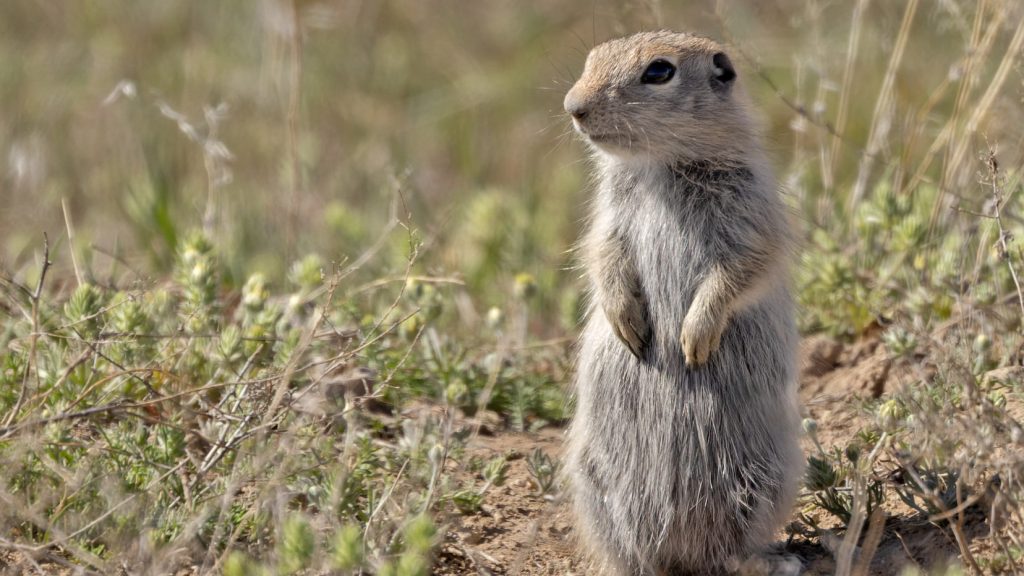
UNC Greensboro’s Dr. Bryan McLean and his collaborators have identified a new mammal in North America. Urocitellus idahoensis, the Snake River Plains ground squirrel, is named for its singular habitat in southern Idaho.