Field Work in South Africa
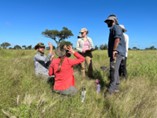
Drs. Wilcox and Koerner have an active research program funded by the National Science Foundation involving graduate students, undergraduates, and citizens of South Africa. They are studying how biodiversity promotes recovery after compound extreme events such as the extreme drought and simultaneous heavy herbivory that occurred in southern African between the years of 2015-2016, or the drought that swept across Kenya in 2021 and 2022. The primary location of their study site is in Kruger National Park, South Africa.
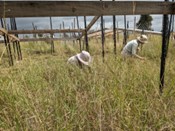
The picture below shows one of their long-term plots established in 2016. The adjacent graph shows the severity of the drought compared to droughts over the last 100 years. In 2017, we revisited these plots, expecting minimal recovery of vegetation one year after the drought. To our surprise, we found full recovery of plant growth in 2017 shown in the bottom row of photos. However, the types of species that recovered in 2017 varies across different savanna areas. Some areas were dominated by annual forbs that are extremely poor food for herbivores (bottom left photo), and other areas were dominated by palatable grasses (bottom right photo). Importantly, we found that areas in which recovery of palatable grasses was greater were in areas that had greater biodiversity. The bottom graph shows, “evenness” of grasses before the drought. 0 on y axis means full recovery, negative values indicate low recovery
Wilcox says….“These observations made us realize that we needed to further explore the connection between biodiversity and recovery after compound extreme events. So last year we set up an experiment simulating extreme drought, heavy herbivory, and severe fire, and we are measuring the diversity of plant characteristics and closely monitoring the responses and recovery of vegetation in these experimental plots.”
Statement from Dr. Sally Koerner says this about student work on the project:
“This January, five UNCG graduate students in the Biology Department are going to Kruger National Park in South Africa for a month of fieldwork; [Kevin Wilcox and I] will go again for 3 weeks in South Africa with four graduate students, and in March we will attend the Savanna Science Networking Meeting where savanna scientists from all around the world come to present work. Our team snagged three of the talks (Kevin Wilcox, PhD student Rose Terry, and PhD student Kalea Nippert) and two of the posters (PhD students Shelby Williford and Sophia Ronan) for what are very competitive slots!”
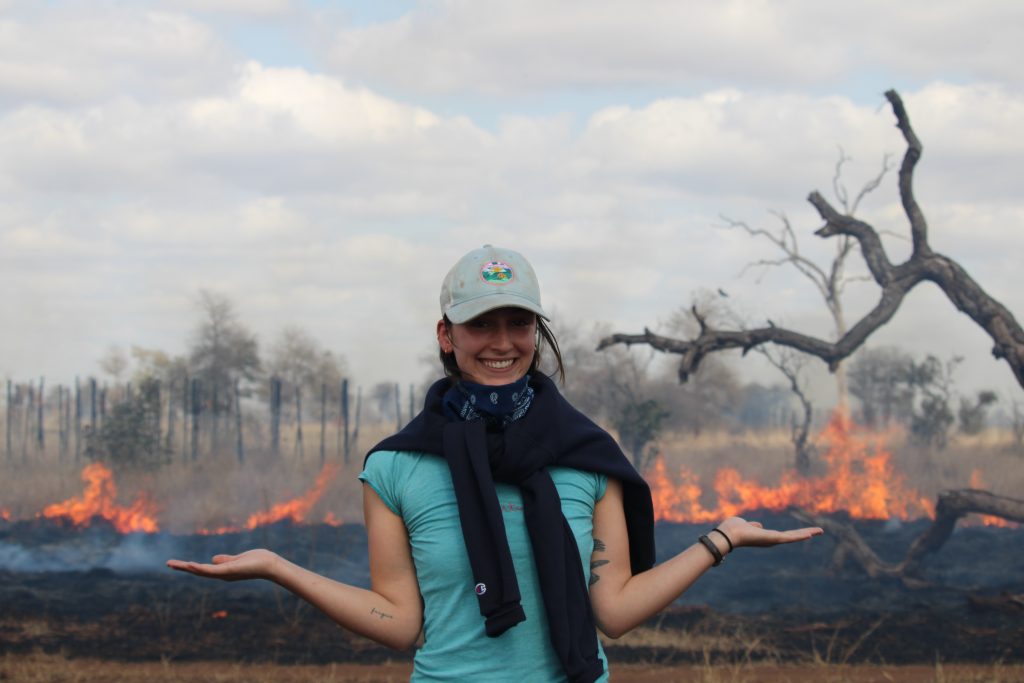
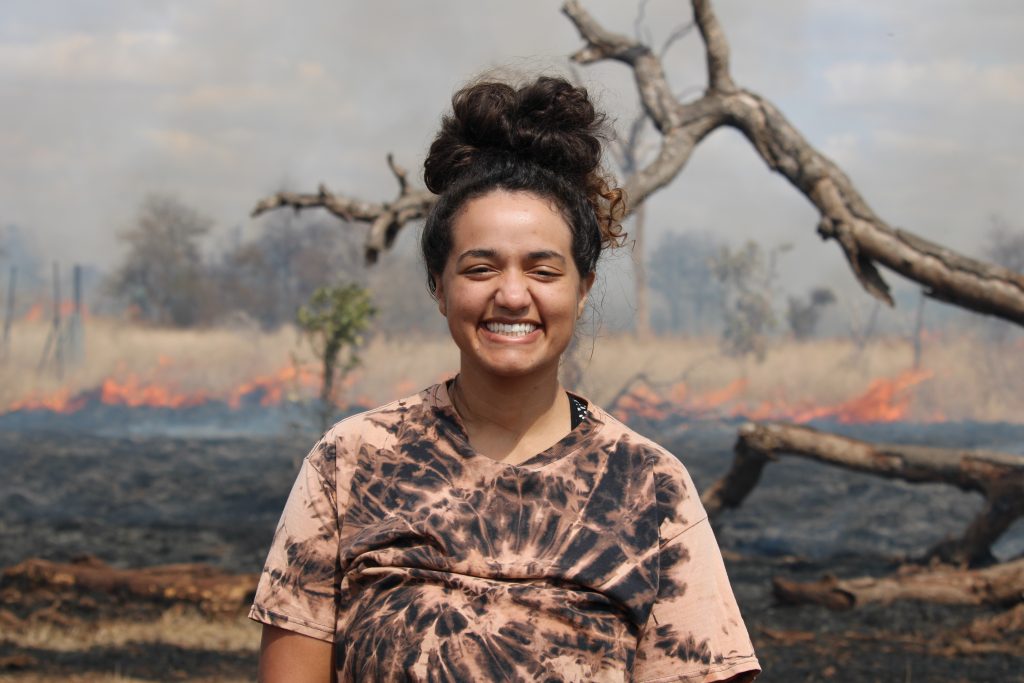
PhD student Shelby Williford and Laboratory Manager Maya Parker-Smith stand in front of a controlled burn in Kruger National Park in South Africa. Williford was invited to present a poster on the Wilcox and Koerner Labs’ work on savanna grasses and the effects of burning on the ecosystem.