Our faculty have highly respected research programs nationally and internationally. A sampling of the 2024 active programs, many of which are collaborative with other scientists, and biology faculty who direct these programs are shown here:
| Evaluating the reproductive success of Eastern Bluebird as influenced by nesting proximity to different water body types | Akira Terui | Piedmont Bird Club |
| Identifying key restoration habitats in a metapopulation network to improve species viability: a case study of Topeka Shiner | Akira Terui | Syngenta |
| Collaborative Research: The role of branching complexity in driving food chain length in rivers | Akira Terui | NSF BIO Division of Environmental Biology (DEB) |
| Collaborative Research: Deciphering the mechanisms of iron acquisition and accumulation in the underutilized ancient crop tef (Eragrostis tef) | Ayalew Osena | National Science Foundation (NSF) |
| TRTech-PGR: PlantTransform: Boosting Agrobacterium-mediated transformation efficiency in the orphan crop tef (Eragrostis tef) for trait improvement | Ayalew Osena | NSF Biological Science (BIO) |
| Enabling Farm Resilience Using Indigenous and Niche Vegetables: Production and Plant Health, Bioactive Compounds, Food Transformation and Profitability | Ayalew Osena | North Carolina Agricultural and Technical State University (NCAT) |
| Identifying Effective Farming Practices to Reduce Risks of Per- And Polyfluoroalkyl Substances (PFAS) in Food Crop Productions | Ayalew Osena | Clemson University |
| Identification of bioactive compounds from tef (Eragrostis tef) seed extracts for antioxidant properties | Ayalew Osena | National Institutes of Health (NIH) |
| Acquiring resistance to anoxia in neural circuit function | Ayalew Osena | National Institutes of Health (NIH) |
| Roles of Microplastics in Reclaimed Water – Enhancing Persistence and Bioavailability of Antimicrobials in Agricultural Soils | Ayalew Osena | Clemson University |
| BRC-BIO: Flexible traits and functional trade-offs: an integrated analysis of gastrointestinal plasticity in mammals | Bryan McLean | NSF Biological Science (BIO) |
| Collaborative Research: Ranges: Building Capacity to Extend Mammal Specimens from Western North America | Bryan McLean | NSF Biological Science (BIO) |
| Systematics and Species Delimitation of the mole voles, genus Ellobius. | Bryan McLean | Society of Systematic Biologists |
| Collaborative Proposal: STEPP-NET: Steppe Parasite Networks | Bryan McLean | NSF BIO Division of Environmental Biology (DEB) |
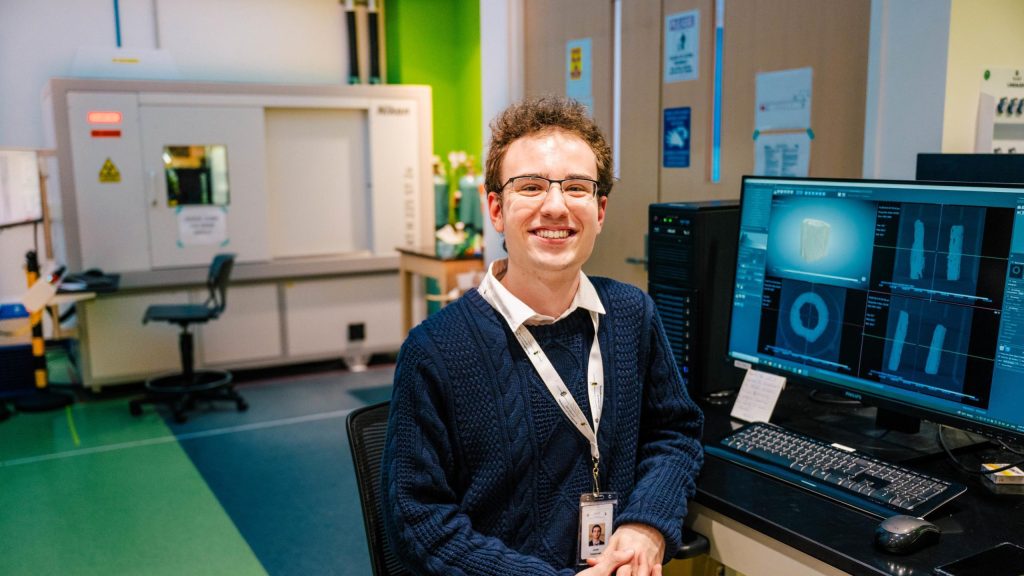
| MRI: Acquisition of Micro-computed Tomography and 3D Imaging Infrastructure for Interdisciplinary STEM Research in North Carolina | Bryan McLean | National Science Foundation (NSF) |
| NC DHHS Contract to Survey Tick Distribution in NC 2024-2025 | Gideon Wasserberg | NCDHHS Department of Health and Human Services |
| MCA: Physiology-based mechanistic models of vector fitness to forecast species responses to coarse- and fine scale anthropogenic environmental change | Gideon Wasserberg | National Science Foundation (NSF) |
| First detection of rickettsiae in a US chigger population and the potential risk to people | Gideon Wasserberg | North Carolina State University (NCSU) |
| SumiShield 50WG efficacy testing against Sandflies | Gideon Wasserberg | Sumitomo Chemical Company |
| Collaborative Proposal: Response of mercury cycling to disturbance and restoration of low-gradient forested watersheds | James Coleman | National Science Foundation (NSF) |
| The role of dTopors in Drosophila male meiosis | John Tomkiel Dean | National Institutes of Health (NIH) |
| Development of a Beekeeper-Friendly Assay to Quantify Honey bee Colony Grooming Behavior | Kaira Wagoner | North American Pollinator Protection Campaign (NAPPC) |
| Identification of hygiene-associated protein markers to improve selection for honey bee pest and disease resistance | Kaira Wagoner | Project Apis m. |
| Towards a sustainable and productive apiculture: Selection of more resilient honey bees | Kaira Wagoner | University of the Basque Country, Spain |
| Honey bee queen survival and productivity as a function of colony and queen health metrics | Kaira Wagoner | University of Minnesota |
| Examining the role of honey bee gut microbiota on physiology, disease resistance, and environmental stressors to improve pollinator health | Kaira Wagoner | North Carolina State University (NCSU) |
| Analysis of the utility and cost effectiveness of the UBO assay for breeding VSH in the absence of Varroa in an Australian commercial environment | Kaira Wagoner | The Bee Lady Apiaries |
| Investigation of the efficacy and utility of the UBO Assay in testing for Varroa-resistance in Australian honey bee colonies | Kaira Wagoner | Commonwealth Scientific and Industrial Research Organization (CSIRO) |
| Investigation of the efficacy and utility of the UBO Assay in distinguishing hygienic and non-hygienic honey bee colonies for selection and monitoring purposes by Flemish beekeepers | Kaira Wagoner | Buckfast Flanders |
| Investigation of honey bee virus deposition and replication on common crop flowers | Kaira Wagoner | Eastern Apicultural Society (EAS) |
| Strengthening the quality and availability of locally adapted honey bee stock in Vermont | Kaira Wagoner | University of Vermont |
| Enhancing selection and breeding for hygienic behavior and mite resistance in commercial queen breeding operations | Kaira Wagoner | Bee Informed Partnership, Inc. |
| Enhancing selection and breeding for hygienic behavior and mite resistance | Kaira Wagoner | Bee Informed Partnership, Inc. |
| Pollinator driven intercropping: enhance yield and services for vegetable growers | Kaira Wagoner | North Carolina Agricultural and Technical State University (NCAT) |
| Wagoner Saskatchewan Beekeepers Development Commission (SBDC) Proposal | Kaira Wagoner | Saskatchewan Beekeeper Development Commission |
| Wagoner Meadow Ridge Enterprises, LTD Contract | Kaira Wagoner | Meadow Ridge Enterprises, LTD |
| Hydrocarbon-induced immune priming to improve honey bee colony Varroa-resistance | Kaira Wagoner | Project Apis m. |
| Integrating trait diversity across hierarchical scales to predict biological resilience in an era of extreme environmental change | Kevin Wilcox & Sally Koerner | National Science Foundation (NSF) |
| Collaborative Research: Revealing the vast diversity within the legume-rhizobia mutualism | Kimberly Komatsu | NSF Biological Science (BIO) |
| Plant-soil feedbacks in the legume-rhizobia symbiosis as a key driver of soil health in grazing lands | Kimberly Komatsu | USDA NIFA Agriculture and Food Research Initiative (AFRI) |
| Louis Stokes New STEM Pathways Implementation-Only Alliance: Mountains to Sea North Carolina LSAMP | Malcolm Schug | National Science Foundation (NSF) |
| Collaborative Research: Practices and Research on Student Pathways in Education from Community College and Transfer Students in STEM (PROSPECT S-STEM) | Malcolm Schug | University of Nebraska at Lincoln |
| Spartans ADVANCE: Adaptations of practices for faculty equity, diversity, and inclusion at the University of North Carolina at Greensboro (UNCG). | Malcolm Schug | National Science Foundation (NSF) |
| Louis Stokes New STEM Pathways Implementation-Only Alliance: Mountains to Sea North Carolina LSAMP | Malcolm Schug | National Science Foundation (NSF) |
| Preparing College Students who Enter from High School or Transfer from Community Colleges for STEM Careers and Graduate School | Malcolm Schug | National Science Foundation (NSF) |
| SEED Grant: Exploring the role of nutrient-based mutualisms in the production and restoration of longleaf pine savanna | Sarah Koerner | USDA NIFA Agriculture and Food Research Initiative (AFRI) |
| Understanding symbiotic nitrogen fixation in longleaf pine savannas to enhance production | Sarah Koerner | US Department of Agriculture (USDA) |
| Legume-rhizobia symbiosis as a tool to enhance restoration success and long-term sustainability of longleaf pine savanna forestry | Sarah Koerner | North Carolina Biotechnology Center (NCBC) |
| Assessing impacts of patch-burn grazing management on sustainability of multiple agroecosystem services | Sarah Koerner | USDA NIFA Agriculture and Food Research Initiative (AFRI) |
| Identifying mechanisms of rangeland drought resilience: management strategies for sustainable ecosystem health | Sarah Koerner | US Department of Agriculture (USDA) |
| Exploration of bioactive components in Hawaiian mamaki tea with potential to modulate vascular inflammation | Zhenquan Jia | USDA NIFA Agriculture and Food Research Initiative (AFRI) |
| Novel carbon nanodots for modulation of OxLDL mediated inflammation and inhibition of atherosclerosis | Zhenquan Jia | National Institutes of Health (NIH) |
| Activating Multiorgan Antioxidative Gene Network for Treating Sepsis | Zhenquan Jia | Campbell University |
| United Soybean Board Soy Health Research Program incentive award | Zhenquan Jia | United Soybean Board (USB) |