
Bachelor of Arts (BA)
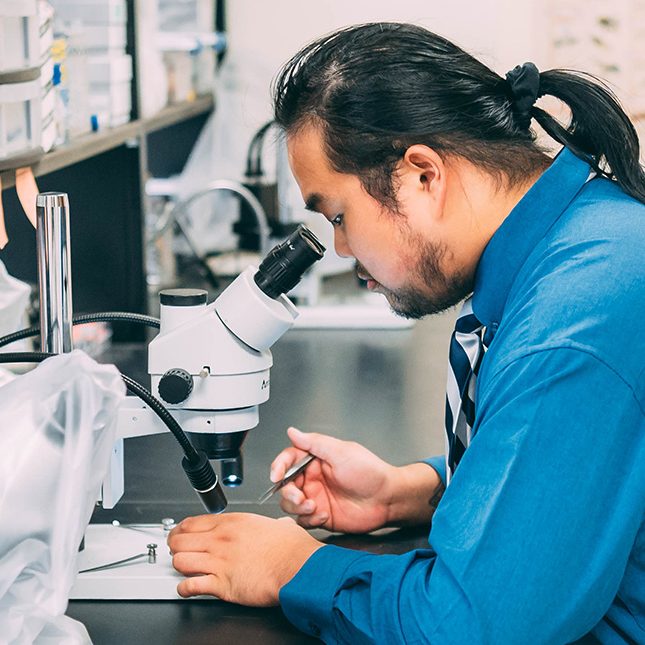
Biology consistently ranks as the most popular major at UNC Greensboro, and it’s easy to see why. A hallmark of this degree program is the opportunity to participate in stimulating undergraduate field and laboratory research with award-winning faculty.
Enabled by this extensive hands-on experience, many students go on to attend top medical schools, enter competitive graduate programs, and increase society’s knowledge of life in all its fascinating forms.
Bachelor of Science (BS)
The Bachelor of Science in Biology degree includes more requirements in science fields, including chemistry, math, and physics, with the expectation that you’ll attain a greater understanding of biology than a student pursuing the B.A.
The Bachelor of Science is a good choice for those pursing post-graduation professional degrees or graduate school in the sciences.
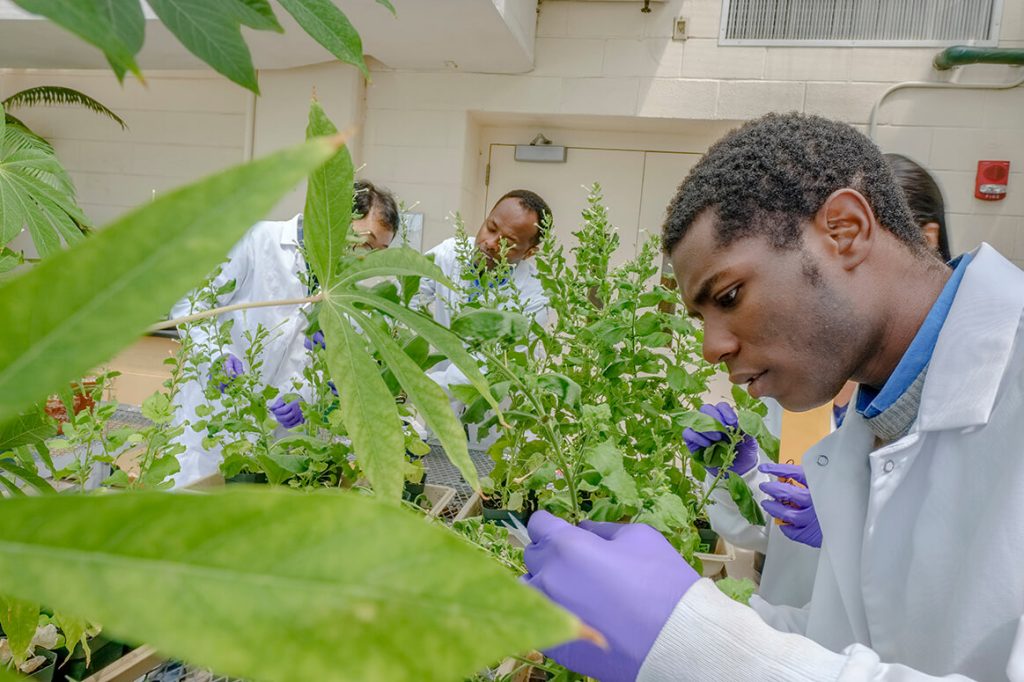
Available Concentrations
MAster of Science (MS)
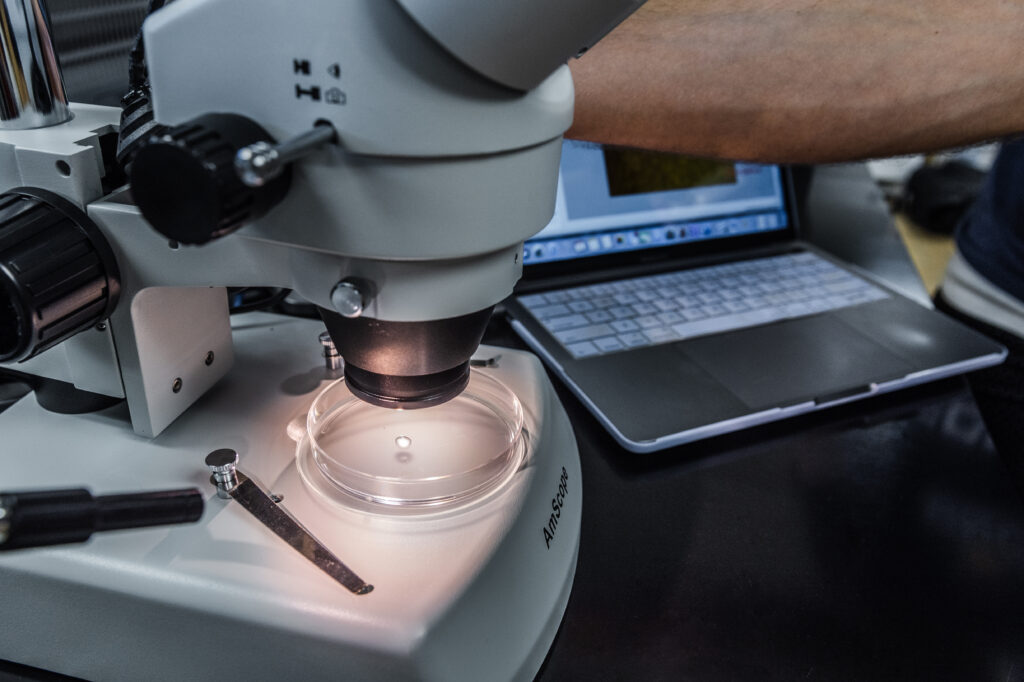
The master of science (M.S.) in biology prepares students for careers in the biological sciences and provides a strong foundation for further academic training, such as medical school or a doctoral program. An advisory committee works closely with each student to tailor a specific plan of study to meet each student’s needs and goals.
M.S. students conduct research under the guidance of a faculty advisor and write a master’s thesis based on their research.
PHD in Biological Sciences
The PhD in Biological Sciences (formerly Environmental Health Science) prepares students for senior-level positions in professions related to environmental health science in its broadest sense. Students in this biology PhD program will be trained in the fundamental understanding of environmental problems and their consequences on human health and well-being.
The Biological Sciences program curriculum focuses on how environmental disturbances affect the ecosystem, community function, and species survival. Courses also explore the toxicological consequences of these environmental disturbances on physiological and cellular processes, as well as genome structure and gene function.
Undergraduate Minor
More About Our Academic Program
Innovative CURE Curriculum
As part of a National Science Foundation Study through the Council of Undergraduate Research, the Departments of Biology and Chemistry & Biochemistry redesigned their curriculum so scientific research is infused into classes from the time students take their first introductory course until they take advanced courses during their final year.
Science education research demonstrates that these teaching methods help students feel they are part of the process of science experimentation and learn science content through the process of performing research more effectively than traditional lectures and lab courses.
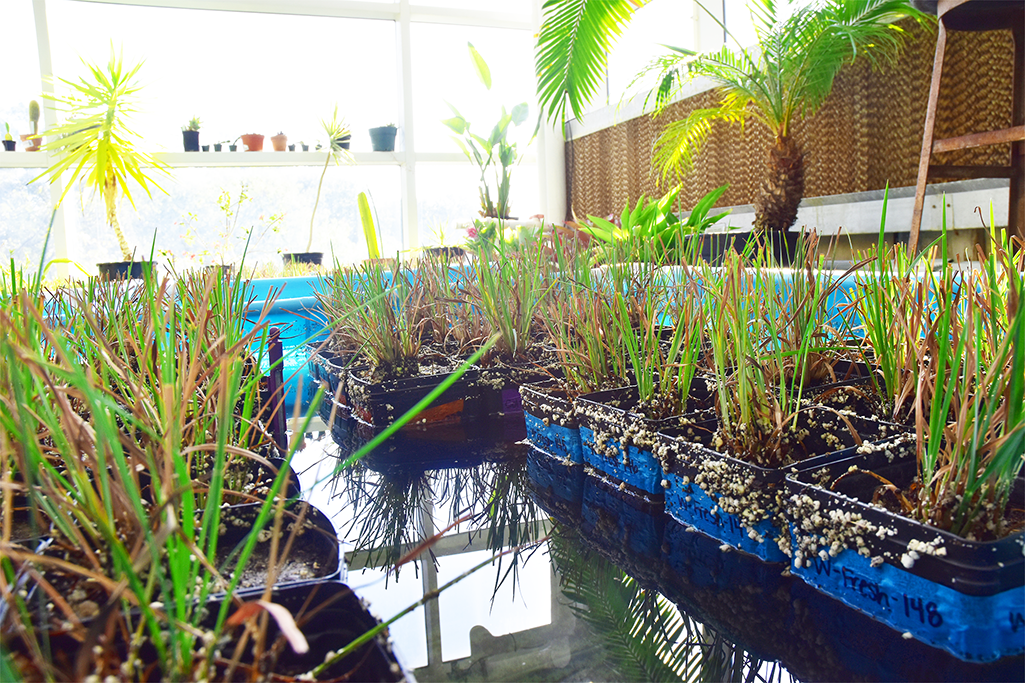
To take it a step further, the Department of Biology has developed laboratory modules that are directly aligned with faculty research programs. For example, in BIO 112 Principles of Biology II, students perform research on water quality in campus wetlands and creeks using the waterflea Daphnia as an environmental indicator, aligned with ecology faculty research programs. BIO 315 Ecology and Evolution lab, students perform research on environmental stress tolerance of grasses, research aligned with plant ecology research programs.
In the majority of our courses, whether they be lectures or laboratory experiences, students experience some type of active learning focusing on experiencing biological research that is performed and is changing our understanding of our natural world.
At UNCG, our faculty are committed to teaching and student success at the highest levels. Our innovative curriculum development is recognized nationally as an example of how to infuse scientifically proven, highly effective pedagogical approaches throughout the curriculum.
Health Career Preparation and Advising
UNCG supports students who are planning to pursue a graduate degree in a health-related field such as medicine, dentistry, physician assistant, physical therapy, occupational therapy, pharmacy, veterinary medicine, optometry, genetic counseling, and many more. Those preparing for competitive applications to these fields should declare an interest track in the appropriate pre-health field while also completing a bachelor’s degree in a major of their choice.
Learn More about Health Care Preparation and Advising
Pre-Health Careers Post-Baccalaureate Program
Our flexible program creates unique plans of study to serve the needs of both career-change individuals and academic enhancers. Those who have not yet completed the courses that are required for applying to Medical, Dental, Physician Assistant, Physical Therapy, Pharmacy, or other graduate-level health professional schools can take all of their required courses here. We also serve students who have taken some or all of the required basic classes already, but desire to enhance their academic records through selective re-takes and new upper-level science coursework. Still other students will take science classes in our program due to expired prerequisites no longer accepted by professional schools.
Learn More About Our Pre-Health Careers Post-Baccalaureate Program